Infection Control Guide
Infection Control Excellence
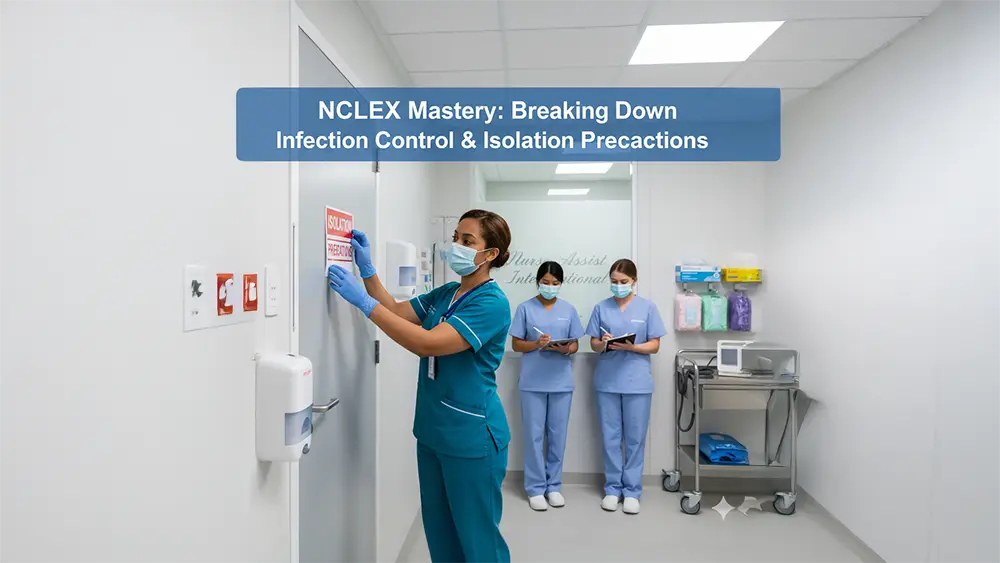
Infection control is a vital component of nursing practice and a frequent topic on the NCLEX. Understanding the four types of isolation precautions and how to apply them correctly is essential for both exam success and safe patient care.
NCLEX Focus Areas:
- • Types of isolation precautions
- • Appropriate PPE selection
- • Hand hygiene protocols
Patient Safety Goals:
- • Prevent healthcare-associated infections
- • Protect patients and healthcare workers
- • Break the chain of infection transmission
1Standard Precautions
Used for all patients, these include hand hygiene and appropriate use of personal protective equipment (PPE) to prevent the spread of infection.
Key Components
Hand Hygiene
Before and after patient contact
PPE Use
Gloves, gowns, masks as needed
Safe Injection Practices
One needle, one syringe, one use
When to Apply
- All patient interactions
- Contact with blood or body fluids
- Handling contaminated equipment
- Environmental cleaning tasks
2Contact Precautions
Required for infections spread by direct contact (e.g., MRSA, C. difficile). Wear gloves and gowns; dedicate equipment to the patient to avoid cross-contamination.
Contact Precaution Protocol
Common Organisms:
- MRSA (Methicillin-resistant Staphylococcus aureus)
- C. difficile (Clostridioides difficile)
- VRE (Vancomycin-resistant Enterococcus)
- Scabies and lice infestations
Required PPE:
- Gloves before entering room
- Gown for direct patient contact
- Dedicated patient equipment
- Remove PPE before leaving room
3Droplet Precautions
Used for respiratory infections like influenza. Wear a surgical mask within one metre of the patient; the patient should wear a mask when transported.
Droplet Transmission Control
Common Infections
- • Influenza
- • Pertussis (whooping cough)
- • Pneumonia (certain types)
- • Meningitis (bacterial)
PPE Requirements
- • Surgical mask within 1 meter
- • Standard precautions apply
- • Patient mask during transport
- • Private room preferred
Transmission Range
- • Large droplets (>5 micrometers)
- • Travel up to 1 meter
- • Generated by coughing/sneezing
- • Don't remain airborne long
4Airborne Precautions
Used for infections like tuberculosis and measles. Place the patient in a negative-pressure room and wear an N95 respirator. Limit transport.
Maximum Protection Protocol
High-Risk Infections:
Tuberculosis (TB)
Requires N95 respirator
Measles (Rubeola)
Highly contagious airborne virus
Varicella (Chickenpox)
Contact + airborne precautions
Critical Requirements:
- Negative-pressure room (AIIR)
- N95 respirator (fit-tested)
- Door kept closed at all times
- Limit and minimize transport
Master Infection Control with NAI
Remember to wash your hands frequently, identify the type of isolation required and apply the correct precautions for NCLEX success and patient safety.
Standard Precautions
Universal protection for all patients
Contact Control
Direct transmission prevention
Droplet Defense
Respiratory infection protection
Airborne Safety
Maximum protection protocols
Found this helpful? Share it with your colleagues and friends.