Assessment Mastery Guide
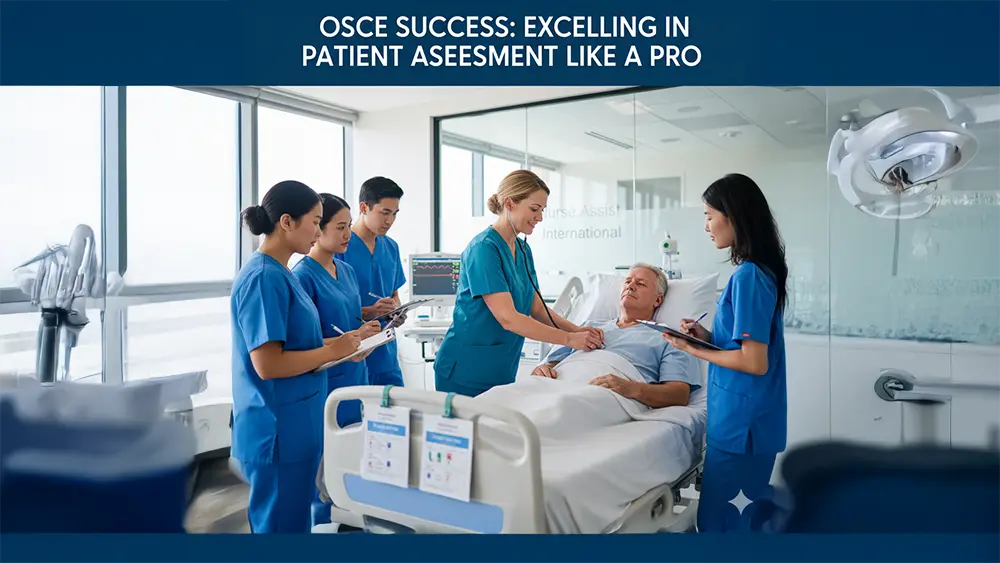
OSCE Success: Excelling in Patient Assessment Like a Pro
The Objective Structured Clinical Examination (OSCE) is a crucial milestone for internationally qualified nurses seeking Australian registration. One of the most fundamental skills tested in OSCE is patient assessment—your ability to systematically evaluate a patient's condition, recognize abnormalities, and respond appropriately.
In this blog, we'll break down essential assessment techniques, common challenges, and expert tips to help you ace this station with confidence!
1Why Patient Assessment Matters in OSCE?
The OSCE patient assessment station evaluates your ability to:
Perform a structured and systematic assessment
Use the A to E (Airway, Breathing, Circulation, Disability, Exposure) approach
Recognize abnormal findings and escalate appropriately
Communicate effectively with the patient
Document findings accurately
A strong patient assessment is the foundation of safe and effective nursing care, making it one of the most critical OSCE stations.
2Mastering the A to E Assessment
The A to E (ABCDE) approach is the gold standard for assessing critically ill patients. Follow this structured method to ensure a thorough and systematic assessment during your OSCE:
AAirway (A) – Is the Airway Clear?
- •Check for airway obstruction (choking, swelling, foreign body)
- •Look for signs of stridor, hoarseness, or difficulty speaking
- •If obstructed, perform airway maneuvers (head-tilt, jaw thrust, suctioning)
💡 OSCE Tip: If the patient is speaking normally, the airway is likely clear!
BBreathing (B) – Is the Patient Breathing Adequately?
- •Observe respiratory rate, depth, and effort
- •Check oxygen saturation (SpO₂) and auscultate lung sounds
- •Look for signs of cyanosis, use of accessory muscles, or asymmetrical chest movement
- •Intervene if needed (oxygen therapy, nebulizers, positioning)
💡 OSCE Tip: A normal respiratory rate is 12-20 breaths per minute—anything outside this range needs further assessment.
CCirculation (C) – Is Perfusion Adequate?
- •Assess heart rate, blood pressure, and capillary refill time
- •Look for pallor, sweating, or cold extremities (signs of shock)
- •Palpate peripheral pulses and check for signs of bleeding or fluid loss
- •Administer IV fluids if necessary (as per orders)
💡 OSCE Tip: Capillary refill time > 2 seconds may indicate poor circulation.
DDisability (D) – Assess Neurological Status
- •Check level of consciousness using the AVPU scale (Alert, Voice, Pain, Unresponsive)
- •Assess pupil size and reaction to light
- •Perform a blood glucose check if altered consciousness is noted
💡 OSCE Tip: Hypoglycemia can mimic neurological issues—always check blood glucose!
EExposure (E) – Check the Whole Body for Clues
- •Inspect for rashes, wounds, or injuries
- •Measure temperature (signs of infection or hypothermia)
- •Maintain patient dignity and warmth while assessing
💡 OSCE Tip: Always verbalize your findings to the examiner!
3Common OSCE Pitfalls & How to Avoid Them
Critical Mistakes to Avoid
Skipping steps
Always follow a structured A to E approach
Ignoring abnormal findings
Identify abnormal values and state appropriate interventions
Poor communication
Always explain what you're doing to the patient and seek consent
Lack of documentation
Clearly record findings and escalate concerns when necessary
4Final OSCE Success Tips
Expert Success Strategies
Practice the A to E assessment until it becomes second nature
Speak your thought process out loud to the examiner
Always check vital signs and escalate abnormal findings
Stay calm, confident, and professional throughout your assessment
Ace Your OSCE with NAI!
At Nurse Assist International (NAI), we provide expert OSCE training, unlimited practice sessions, and hands-on coaching to ensure you pass with flying colors.
Clinical Simulation Labs
Realistic OSCE station practice with actual equipment
Expert Feedback
Professional assessment from experienced OSCE trainers
Unlimited Practice
Practice as many times as you need to build confidence
99% Success Rate
Proven track record of OSCE success
💡 Ready to take your OSCE preparation to the next level? Enroll with NAI today!
Found this helpful? Share it with your colleagues and friends.